seven boards, one set
In the studio it is a contact sheet.
On Amazon it is one frame at a time, met in a fixed order. Everything after the first exists because the first one only bought the click.
In the studio it is a contact sheet.
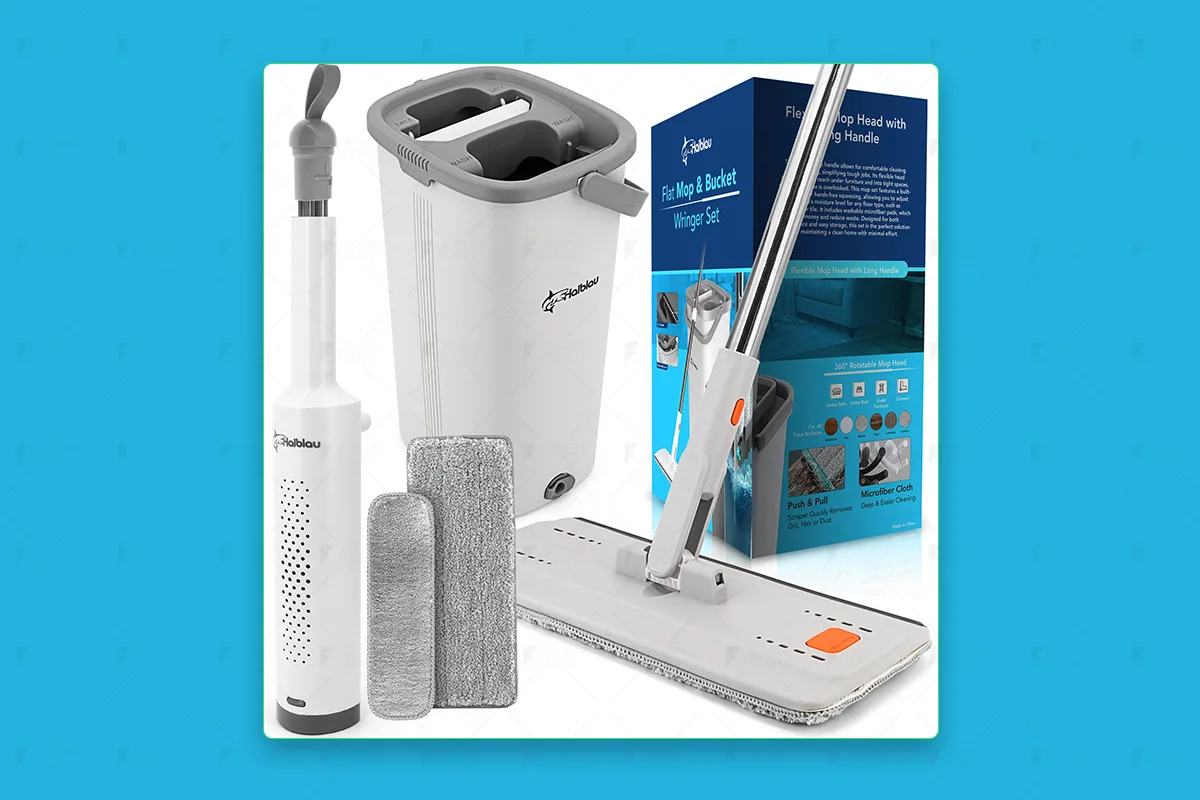
7 frames, in the order a buyer meets them — walked slot by slot below.
Slot 1 of 7
The search thumbnail
Main image
Mop, bucket, spare pads and box on white. A set product has to show the set in slot one — a mop alone would undersell what is being bought.
How we build these →Slot 2 of 7
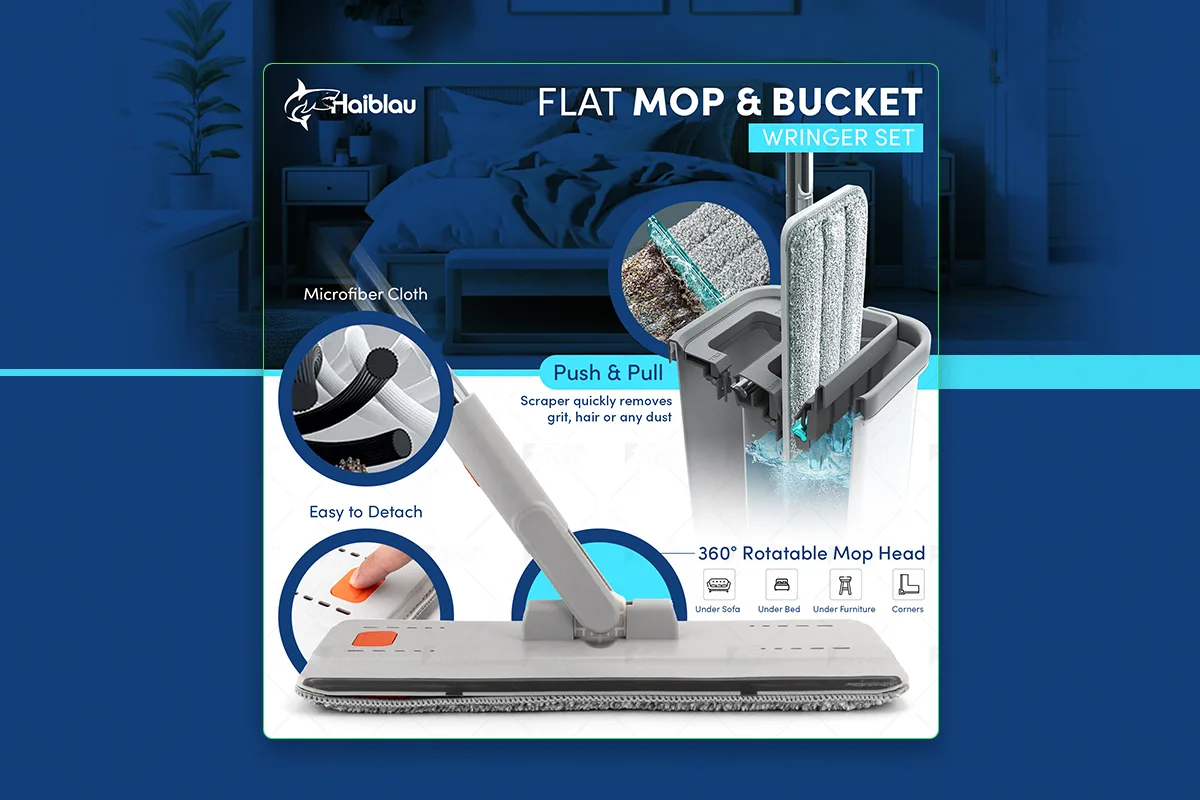
Push and pull
Infographic
The wringer mechanism magnified: easy to detach, 360° rotatable head, the scraper that lifts grit and hair. The self-wringing action is the entire reason this costs more than a mop.
How we build these →Slot 3 of 7
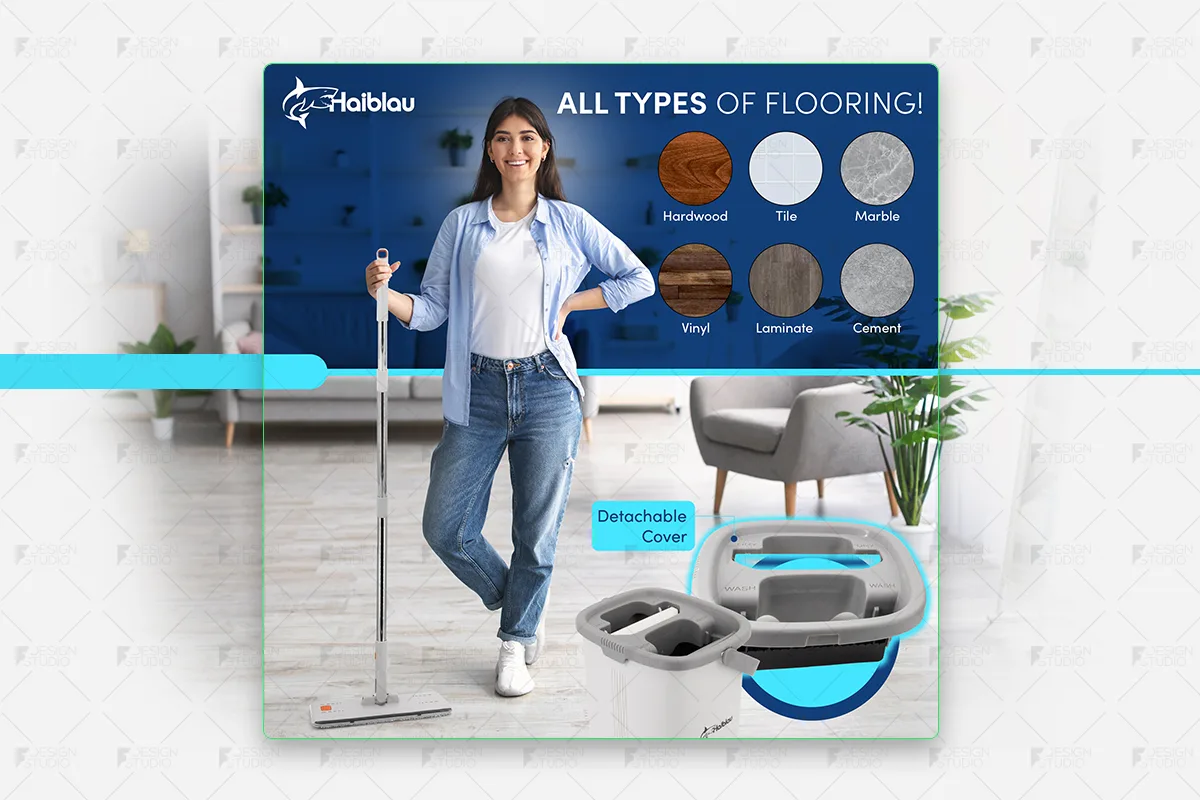
All types of flooring
Infographic
Six floor swatches — hardwood, tile, marble, vinyl, laminate, cement — with the detachable cover called out. Compatibility as a swatch grid, so a buyer finds their own floor rather than reading a list.
How we build these →Slot 4 of 7
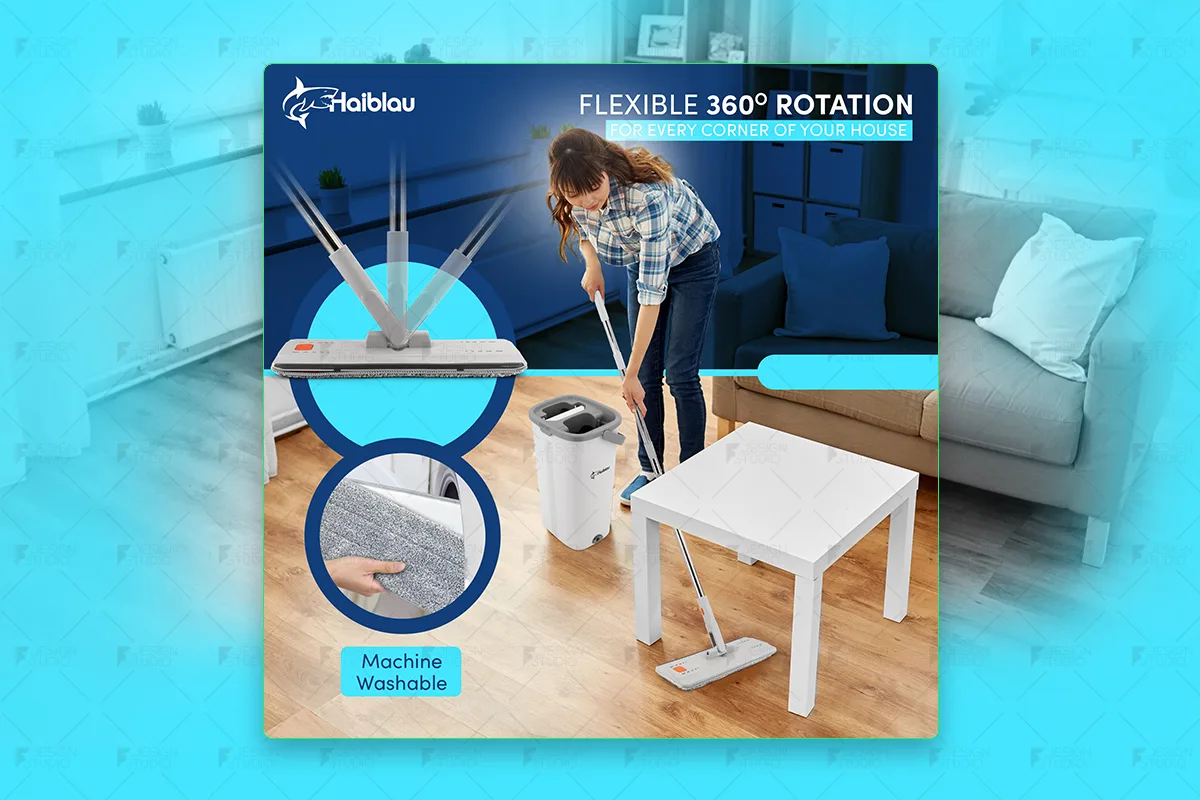
Flexible 360° rotation
Infographic
The mop under a table, reaching. Manoeuvrability is a claim best made by showing the awkward place the head has to get into.
How we build these →Slot 5 of 7
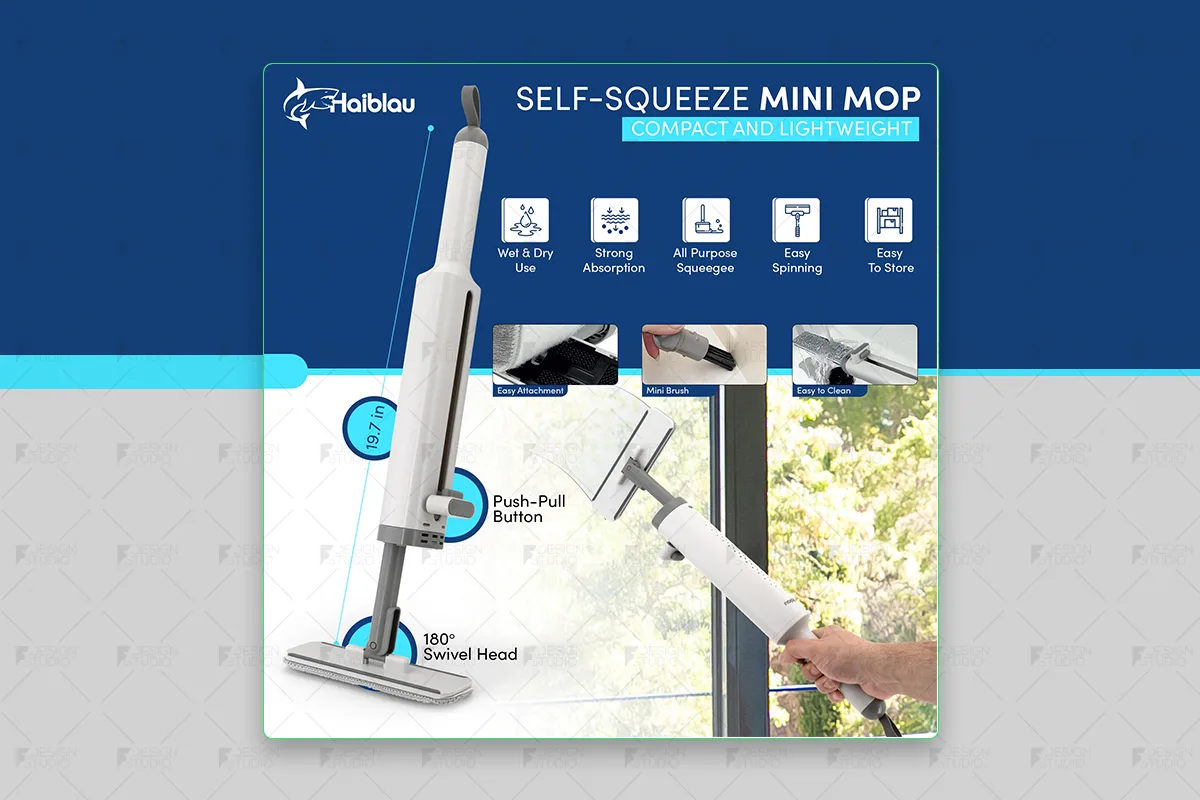
Self-squeeze mini mop
Infographic
The second mop in the set: push-pull button, 180° swivel head, shown cleaning a window. A bundle with two tools needs the second one to look like a product, not an offcut.
How we build these →Slot 6 of 7
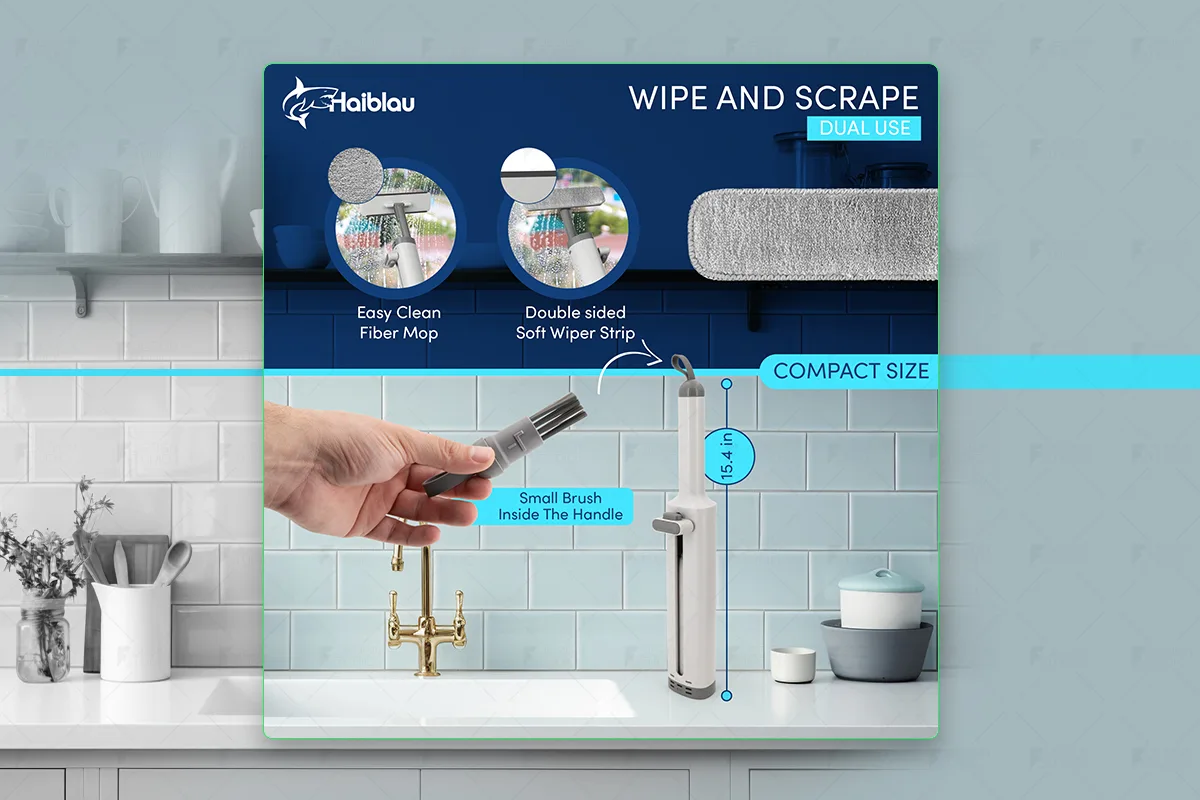
Wipe and scrape
Infographic
The double-sided pad and the small brush hidden in the handle, over a kitchen. The hidden detail is the one worth a frame, because nobody would find it in the description.
How we build these →Slot 7 of 7
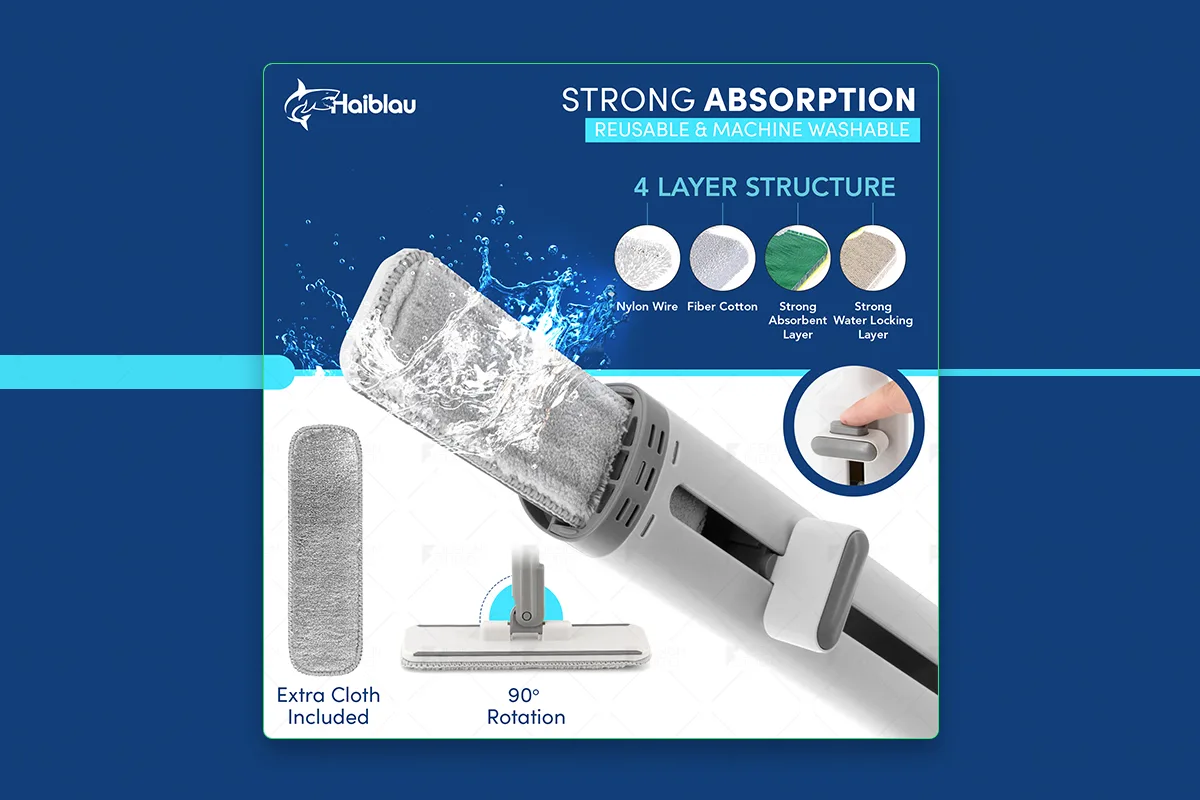
Four-layer structure
Infographic
Nylon fibre, fibre cotton, absorbent layer, water-locking layer — the pad cut open and labelled, with the extra cloth counted in. Absorbency is invisible, so it is drawn as a cross-section.
How we build these →